
Blog
Why Construction Projects in Coimbatore Run Late and Over Budget, and How to Control Changes

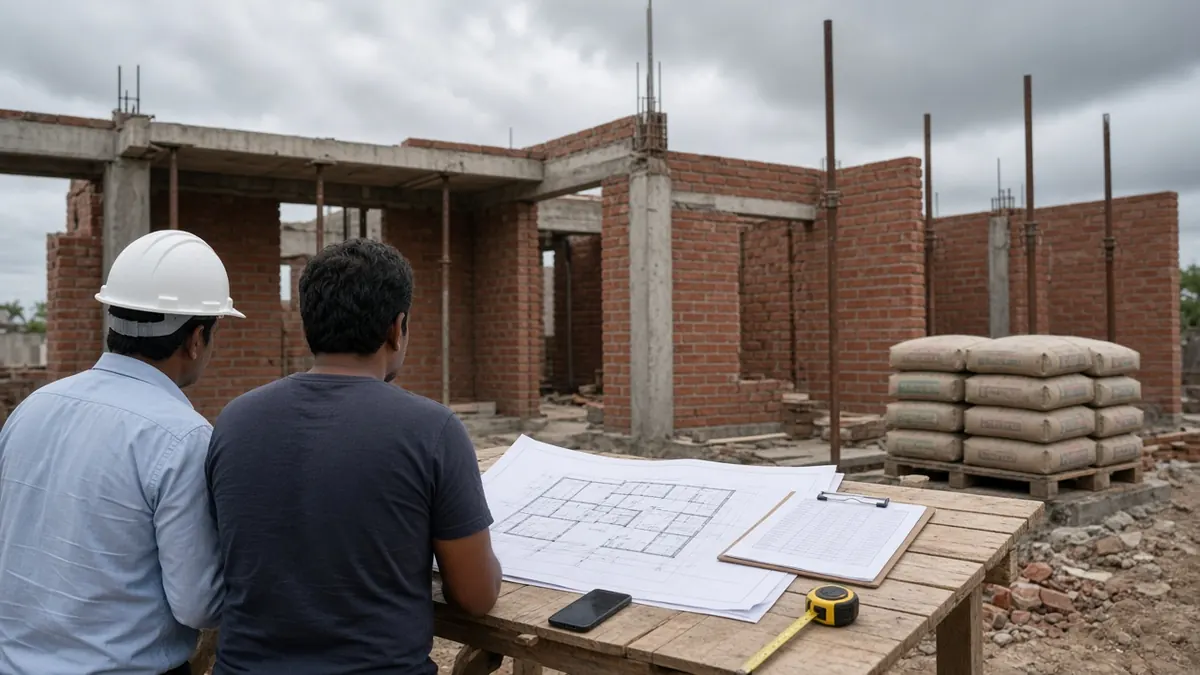
Quick answer: Most construction projects in Coimbatore run late and over budget for the same few reasons: a scope that was not fully defined, drawings that were not complete, decisions taken late or changed during work, approval and payment delays, labour and material shortages, and poor coordination between trades. The fix is boring but effective: a detailed specification, a stage-wise schedule, written change orders priced before work, and someone checking progress and bills on your behalf.
Search any homeowner forum in Tamil Nadu and you will find stories like “they delayed during finishing and extended the cost” or “my final cost ended up at more than double my budget”. These are not rare. The good news is that most delays and overruns have predictable causes, and you can control most of them before the first brick is laid. This guide explains the real causes of construction delays and cost overruns, and how to handle changes without chaos.
Why construction projects run late
- Incomplete drawings. Work starts on an architectural plan without structural, electrical and plumbing details. Questions on site then wait for answers.
- Approval delays. Work cannot start, or must stop, until permits are in hand.
- Late decisions by the owner. Tiles, fittings, kitchen layout or elevation details not chosen in time stop the relevant trade.
- Design changes during work. Moving a wall or window after it is built means demolition and rework.
- Labour availability. Skilled masons, carpenters and electricians are in demand, and festivals and harvest seasons affect availability.
- Material supply. Shortages of specific items, or late ordering of long-lead items such as windows, lifts or imported fittings.
- Payment delays. Late stage payments slow the site.
- Poor trade coordination. Electricians waiting for masons, carpenters waiting for painters, and ceiling work starting before AC piping.
- Weather. Heavy rain slows foundation, roofing and external work.
Why construction projects go over budget
| Cause | What it looks like | How to prevent it |
|---|---|---|
| Vague scope | “Standard tiles”, “good quality fittings” | Specify brand, grade, size and allowance for every finishing item |
| Low allowances | Allowances too low for what you actually want | Set realistic allowances after visiting showrooms |
| Upgrades during work | Better tiles, extra lights, a larger kitchen | Price every upgrade in writing before approving it |
| Design changes | Rework and wasted material | Freeze the design before construction starts |
| Hidden site conditions | Poor soil, rock, high water table | Soil test and site study before final pricing |
| Excluded items | Compound wall, sump, borewell, approvals, EB connection | Ask for an exclusions list and budget them separately |
| Material price changes | Steel or cement prices move during the project | Agree in the contract how price changes are handled |
Our article on fixed-price quotes vs unreliable quotes explains how a clear scope protects your budget.
Change orders: how to handle changes without chaos
Changes are normal. Unmanaged changes are the problem. A simple change order process works for homes and commercial projects alike:
- Write it down. Every change, however small, is described in writing with a sketch if needed.
- Price it. The contractor states the effect on cost, including any work already done that must be removed.
- State the time effect. Does it delay the schedule? By how much?
- Approve before work. The owner signs off before the change is carried out.
- Track it. Keep a running list of approved changes and their total, so the final bill holds no surprises.
The rule is simple: no signed change order, no change. That protects the owner from surprise bills and the contractor from disputes.
Controls that actually work
- Freeze the design before construction, including electrical, plumbing and interior layouts.
- Detailed specification attached to the contract.
- Stage-wise schedule with milestones, reviewed weekly.
- Payments linked to verified stages, not to dates.
- Decision calendar: a list of what you must decide and by when, so the site never waits for you.
- Early ordering of long-lead items.
- Weekly site reports with photos.
- A contingency kept aside for genuine surprises, not for upgrades.
Finishing: where most delays and overruns happen
Many owners report that the project ran smoothly until finishing. That is because finishing involves the most trades, the most choices and the most items that were left as allowances. Coordinating interiors with the civil work helps; our turnkey interiors team plans ceilings, carpentry, lighting and painting in the right order so trades do not wait for each other.
How Infraura helps
Our project management consultancy works on the owner’s side: we help define the scope and specification, check drawings and quotes, set the schedule, inspect quality, verify bills against work done, and run change control. Our article on PMC charges and when a PMC is worth it explains the fee models. If you would rather have one accountable team, our construction services follow the same controls: a written scope, a stage-wise schedule and priced changes before work. We cannot promise that nothing will ever change on a building site; we can make sure you see the cost and time effect of every change before you approve it.
Frequently asked questions
What is the most common reason construction projects are delayed?
In homes and small commercial projects, the most common reasons are late or changing decisions by the owner, incomplete drawings, approval delays, labour and material shortages, payment delays, and poor coordination between trades. Weather adds to these, especially in the monsoon.
Why do construction costs go over budget?
Usually because the scope was not fully defined at the start. Items left as allowances, upgrades during the work, design changes, hidden site conditions and price changes in materials all add up. A detailed specification and a change control process prevent most surprises.
What is a change order in construction?
A change order, also called a variation, is a written record of a change to the agreed scope, with its effect on cost and time, approved by the owner before the work is done. It protects both the owner and the contractor.
How can I stop my builder from extending costs during finishing?
Fix the finishing specification in the contract: brands, grades, sizes and allowances for tiles, fittings, doors, paint and electricals. Agree that any change must be priced and approved in writing before work, and track allowances as they are used.
Is a fixed-price contract the answer to overruns?
A fixed price helps only if the scope and specification are clear. Without detail, fixed price contracts lead to disputes about what was included. Our article on fixed-price quotes explains what to check.
How does a PMC help control delays and costs?
A PMC defines the scope with you, checks drawings and quotes, sets a schedule, inspects quality, verifies bills against work done, and runs a change control process, so you see the effect of every decision before it is made.
Talk to Infraura
Have a question about your project? Speak to our team in Coimbatore. We will explain the options plainly and give you a written scope.
- Call / WhatsApp: +91 96771 71707
- Email: support@infraura.com
- Visit: No:1499, Trichy Road, Coimbatore 641018
- Hours: Monday to Saturday, 10 AM to 7 PM