
Blog
How Much Home Loan Do You Need to Build a House in Coimbatore? Own Contribution, Margin and Budget Sizing

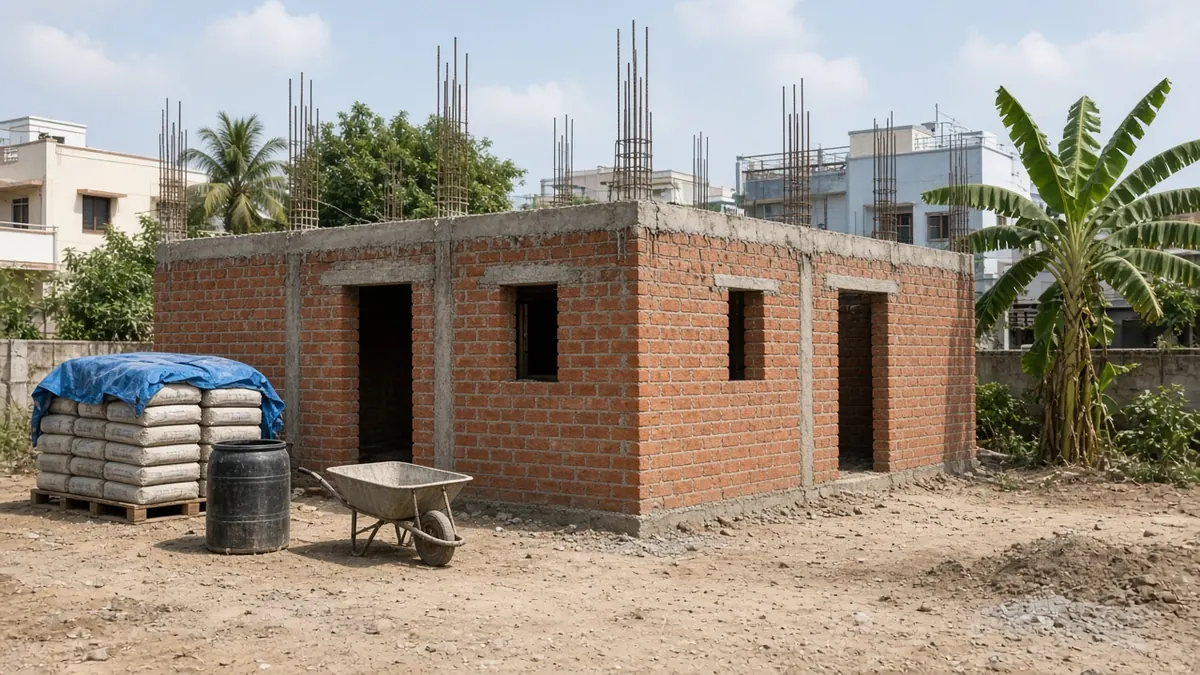
Quick answer: How much you can borrow to build depends on the lender’s view of the project value and of your repayment capacity. RBI also caps how much of a property’s value banks can lend for individual housing loans. Whatever the loan, you fund part of the cost yourself (margin or own contribution), often at the start of construction. Size the house to a budget and EMI you can comfortably carry, and confirm the numbers with your lender.
“How much home loan can I get?” is one of the most searched loan questions in India, and for people building their own house it comes with a second question: “how much do I need to put in myself?” One homeowner on a personal finance forum summed it up after meeting the bank: the lender would fund most of the estimate, and the rest had to come from their own side. This guide explains what decides the loan amount, why your share usually comes first, and how to size your build sensibly.
Infraura is a builder, not a lender, and does not arrange loans or handle loan paperwork. Loan terms differ between lenders and change over time, so confirm the details of your own loan with your lender before you plan around them.
Two things decide how much you can borrow
- The value of the project, as the lender sees it. For a construction loan, the lender looks at the land and the construction cost, using its own assessment.
- Your repayment capacity. Lenders generally consider income, how stable it is, existing EMIs, credit history, age and the loan tenure. Each lender has its own formula.
The lower of the two usually sets your loan amount.
The RBI cap on loan-to-value
RBI’s Master Circular on Housing Finance (2 April 2024, accessed 17 October 2026) sets loan-to-value (LTV) limits for banks’ individual housing loans:
| Loan size | Maximum LTV for banks |
|---|---|
| Up to Rs. 30 lakh | Up to 90% |
| Above Rs. 30 lakh and up to Rs. 75 lakh | Up to 80% |
| Above Rs. 75 lakh | Up to 75% |
These limits are as per RBI’s housing finance guidelines in that circular; check current RBI rules, as they are revised from time to time. These are ceilings, not promises. A lender can lend less, and other types of lenders follow their own regulator’s rules. Whatever is not covered by the loan is your margin.
Why your own money is usually spent first
Construction loans are released in stages as the house is built. In practice, homeowners often find their own contribution goes into the early stages, such as advance, site setup, foundation and plinth, before the first loan release. Releases also take some time after each stage is complete. So it is not enough to have your margin on paper; you need it in cash at the start, with a buffer.
Start from the house, not the loan
A better order than “how much can I borrow, then what can I build” is:
- Define the house. Plot size, floors, rooms, specification. Our 30×40 plot guide shows how plot size shapes the options.
- Get a realistic cost. Use our construction cost calculator for a first figure, then a site-specific quote. Our house construction cost guide explains what is usually included and what is extra.
- Add what people forget. Approval, compound wall, sump, borewell, electricity connection, interiors and a contingency.
- Decide your comfortable EMI. Not the maximum a lender offers; the amount you can carry alongside rent (if you are paying it during construction), school fees and other commitments.
- Close the gap. If the cost is more than your margin plus a comfortable loan, adjust the house: phase the interiors, simplify the elevation, or build one floor now and plan for another later.
Phasing is a legitimate plan
Many families finish the structure and essential finishes first and add interiors or a second floor later. If you phase, plan the later stages now: design the structure for a future floor, and run conduits for smart home wiring and CCTV before plastering so later work does not mean breaking walls. If you phase interiors, plan the full layout now and build it in stages; see our turnkey interiors page.
Keep control of the budget once you start
- Fix the specification in writing before work begins.
- Price every change before it is done.
- Ask your builder for a stage-wise work schedule and follow it. See our construction services.
- If you are using your own contractor, a project management consultant can verify bills and quality before you pay.
Self-employed?
Self-employed applicants are a common question in homeowner forums. Lenders usually want a longer record of business income and tax filings. Organise your records early, ask each lender for its exact list, and allow extra time for processing.
Frequently asked questions
How much home loan can I get to build a house?
It depends on two things: how much the lender values the project (land and construction, as it assesses them) and how much it believes you can repay (income, existing EMIs, credit history, age and other factors). RBI also caps the loan-to-value ratio banks can lend for individual housing loans.
What is margin money in a home loan?
Margin money, or own contribution, is the part of the project cost you fund yourself. The loan covers the rest, up to the lender's limit.
Does the home loan cover the down payment?
No. The down payment or margin is the part you pay. For a construction loan, your share is often spent on the early stages before the lender's first release.
Can self-employed people get a home loan for construction?
Yes, but lenders usually look closely at business income records, tax returns and bank statements. Keep your records organised before you apply and ask the lender for its exact list.
Should I take the maximum loan I am offered?
Not necessarily. Size the loan to a monthly EMI you can comfortably carry alongside your other expenses, and keep a buffer for overruns and delays.
How much cash should I keep ready before construction starts?
Enough for your own contribution plus a buffer. Early stages such as advance, site setup, foundation and plinth are often paid before the first loan release, and releases can take time after each stage.
Talk to Infraura
Have a question about your project? Speak to our team in Coimbatore. We will explain the options plainly and give you a written scope.
- Call / WhatsApp: +91 96771 71707
- Email: support@infraura.com
- Visit: No:1499, Trichy Road, Coimbatore 641018
- Hours: Monday to Saturday, 10 AM to 7 PM