
Blog
Best Bricks for House Construction in Tamil Nadu: Red Brick vs AAC vs Fly Ash vs Solid Blocks for Coimbatore Heat

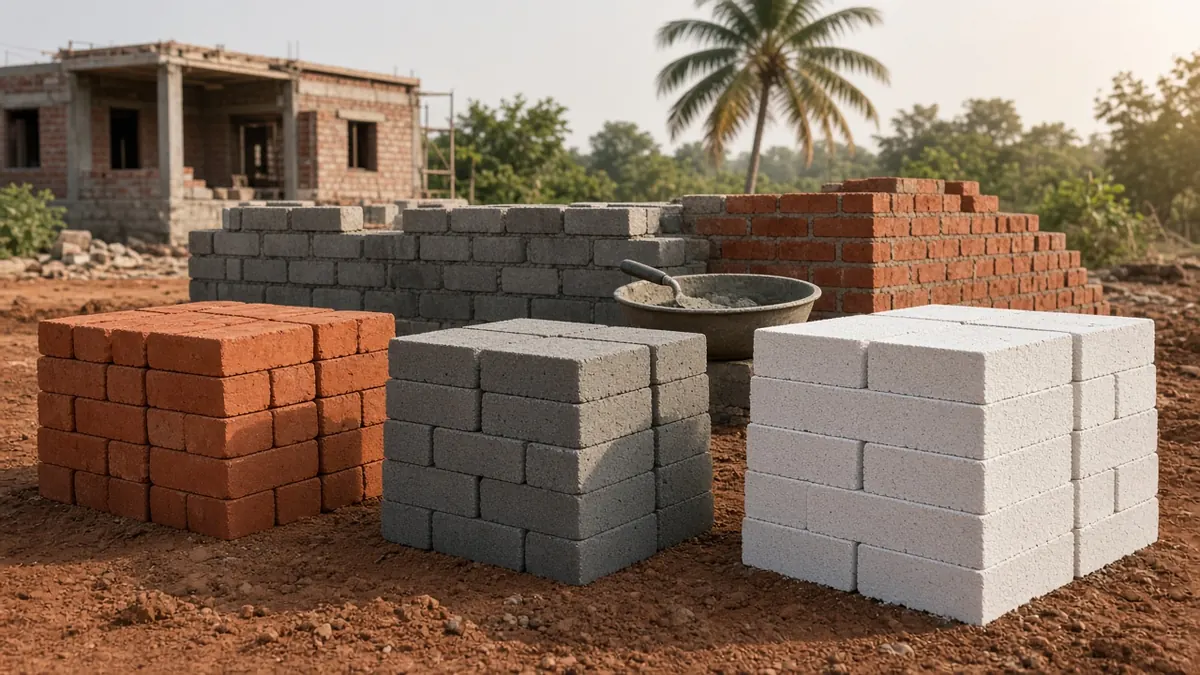
Quick answer: For most homes in Tamil Nadu, the realistic choice is between red clay bricks, AAC blocks, fly ash bricks and solid concrete blocks. Red bricks are familiar and widely available. AAC blocks are light and insulate better, which helps in Coimbatore’s heat. Fly ash bricks are uniform and use industrial by-product. Solid blocks are dense and strong. Pick based on your structure, the quality of local supply and the masons’ experience, and judge heat comfort for the whole house, not the wall alone.
“Which brick is best?” is one of the first material questions families ask when they start building, and the answers online often push one product. This guide to the best bricks for house construction in Tamil Nadu compares the four common wall materials, with a focus on what matters in Coimbatore: heat, monsoon rain, strength and practical quality checks. We do not rank brands or quote prices, because both change from place to place.
The four main options
Red clay bricks
Fired clay bricks have been used in Tamil Nadu homes for generations.
- Strengths: familiar to every mason; easy to cut and chase for conduits; good compressive strength when well made; widely available.
- Limitations: quality and size vary between kilns; heavier than AAC; more mortar joints per wall; good clay brick needs proper firing.
AAC blocks
Autoclaved aerated concrete blocks are factory-made, light and large.
- Strengths: light weight, which reduces load on beams and foundations; better thermal insulation than solid bricks of similar thickness; uniform size, so walls rise faster with fewer joints.
- Limitations: need the right adhesive or mortar and trained masons; must not be laid soaking wet; fixing heavy items needs suitable anchors; joints with concrete need care to avoid cracks.
Fly ash bricks
Made from fly ash, a by-product of thermal power plants, with lime or cement and other materials.
- Strengths: uniform size and smooth faces, so less plaster may be needed; use an industrial by-product.
- Limitations: quality varies a lot between makers; heavier than AAC; check test reports and curing.
Solid concrete blocks
Dense blocks made from cement, aggregate and sand.
- Strengths: strong and durable; suit compound walls, basements and load-bearing parts where the engineer specifies them.
- Limitations: heavy; store more heat than lighter materials; harder to chase for conduits.
Comparison at a glance
| Factor | Red brick | AAC block | Fly ash brick | Solid block |
|---|---|---|---|---|
| Weight | Medium to heavy | Light | Medium to heavy | Heavy |
| Heat insulation | Moderate | Better | Moderate | Lower |
| Size consistency | Varies by kiln | High | High | High |
| Mason familiarity | Very high | Needs trained masons | High | High |
| Ease of chasing for wiring | Easy | Easy with care | Moderate | Harder |
| Typical use | All walls | Infill walls, upper floors | All walls | Compound walls, heavy-duty walls |
These are general characteristics, not test results. Actual performance depends on the specific product and how it is laid.
AAC blocks vs red bricks: which is best for Coimbatore heat?
This is the comparison most homeowners care about. AAC’s air pockets slow heat flow through the wall, so an AAC wall facing the west sun will usually pass on less heat than a solid brick wall of the same thickness. That said, the walls are only part of the picture:
- The roof slab usually takes the most sun. Roof insulation, reflective coatings or a sheet roof over the terrace often make a bigger difference. See our guide to heat-smart roofing in Coimbatore, and our roofing services for terrace coatings and sheet roofs.
- Shading and orientation: sunshades, balconies and fewer west-facing windows help.
- Ventilation: cross-ventilation removes heat at night.
What about the monsoon?
All these materials need good plaster, sound joints and proper detailing at sills, sunshades and parapets to keep rain out. External walls facing driving rain need special attention. Leaks through walls are usually about workmanship and detailing, not the brick alone.
Quality checks before you accept a load
- Ask for test reports showing the product meets the relevant BIS (IS) standard.
- Check size and shape: pick a few at random and compare.
- For red bricks: look for even colour and a clear ringing sound when two are struck together; reject under-burnt or broken ones.
- For AAC and fly ash: check edges are not crumbling and blocks are properly cured.
- Store materials off the ground and covered.
- Use the mortar or adhesive the product needs, and follow curing practice.
Masonry design principles are covered in the National Building Code of India 2016; your engineer should specify wall materials and thickness for your structure.
Cost: compare the whole wall, not the unit price
We do not quote brick prices, because they change with supply, transport and season. More importantly, the unit price is misleading. Compare the full wall cost for your design: units, mortar or adhesive, labour, plaster thickness, wastage, and any savings in structure from lighter walls. Our house construction cost guide explains how material choices feed into the overall budget.
How Infraura helps
Our construction services team recommends wall materials based on your structure, budget and the quality of supply available at the time, and explains the trade-offs in writing. If you are building with your own contractor, our project management consultancy checks deliveries, test reports and masonry work on site.
Frequently asked questions
Which brick is best for house construction in Tamil Nadu?
There is no single best brick. Red clay bricks are familiar and widely available; AAC blocks are light and insulate better; fly ash bricks are uniform and use industrial by-product; solid concrete blocks are strong and dense. The right choice depends on your structure, budget, availability of good-quality supply and the skill of the masons.
Are AAC blocks better than red bricks for Coimbatore heat?
AAC blocks contain many small air pockets, so they generally conduct less heat than solid clay bricks of similar thickness, which can help keep rooms cooler. But wall heat also depends on wall thickness, plaster, shading, roof insulation and ventilation. The roof usually brings in more heat than the walls.
Do AAC blocks crack?
Cracks usually come from poor practice rather than the block itself: wrong mortar or adhesive, blocks laid wet, no curing control, or missing bands and mesh at joints with concrete. Follow the manufacturer's method and use trained masons.
Can I mix red bricks and AAC blocks in one house?
Yes, it is done, for example AAC for upper-floor walls to reduce load and bricks elsewhere. Your structural engineer should approve it, and joints between different materials need care to avoid cracks.
Are fly ash bricks strong enough for a house?
Good-quality fly ash bricks that meet the relevant standard are used in load-bearing and framed buildings. Quality varies between manufacturers, so ask for test reports and check samples.
What is the cost difference between red bricks and AAC blocks?
Prices change with supply, transport and size, and the true comparison includes mortar, labour, plaster and structural savings, not just the unit price. Ask your builder for a wall-cost comparison for your design.
Talk to Infraura
Have a question about your project? Speak to our team in Coimbatore. We will explain the options plainly and give you a written scope.
- Call / WhatsApp: +91 96771 71707
- Email: support@infraura.com
- Visit: No:1499, Trichy Road, Coimbatore 641018
- Hours: Monday to Saturday, 10 AM to 7 PM